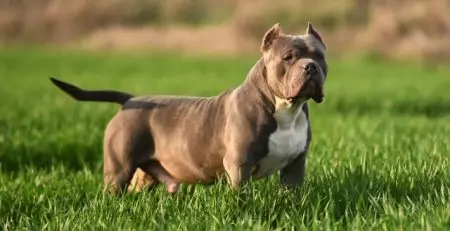

https://www.doglistener.co.uk/puppies/criticalperiods.shtmlSeparation in Dogs accounts for approximately 15% of all behavioural cases here is how to work your way through the problem.
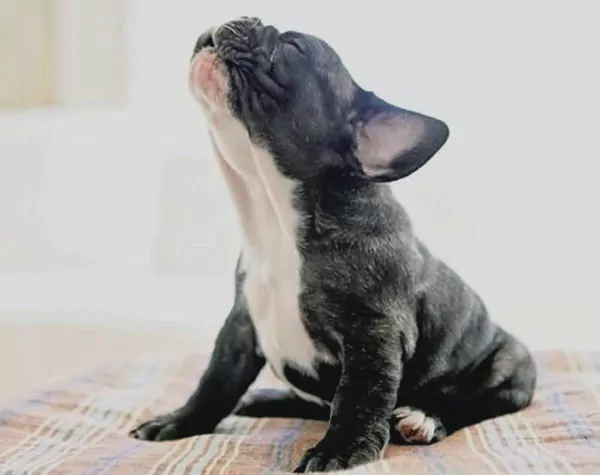
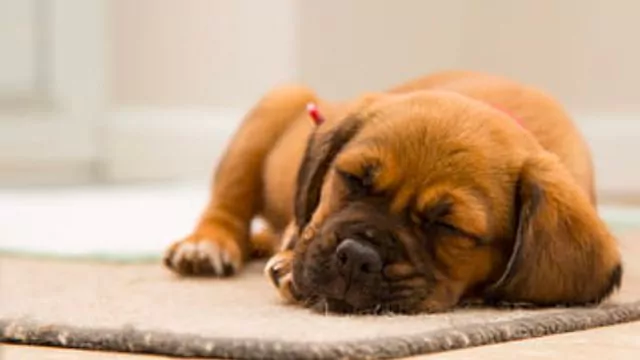
Separation Anxiety: Is diagnosed in around 15% of all behavioural cases. When left alone, most dogs find a familiar spot and go to sleep.
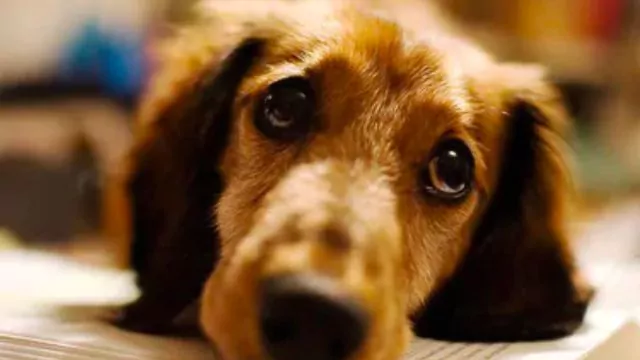
However, a dog when suffering from separation anxiety can become extremely anxious, fearful and frantic when you either leave the room or the house.
This is caused by them not understanding where you or your family have gone or if you will ever return. See (1) Puppy Crying at Night
Dog’s can exhibit behaviour which may include chewing, barking, salivating, urinating, defecating, vomiting, self-harming, depression or frantic escape behaviour.
Common problems are chewing through walls, scratching through doors, breaking out of crates or cages or trying to dig their way out of a house or flat.
In some cases, the dog can become ill, stop eating, or suffer from depression or even hurt itself by self-harming or damage itself in its frenzy to escape.
Hence the reason for a buying a quality crate that will last you for the lifetime of the dog. I do sell quality crates that do not have the welding split open and are quality secure steel construction. (2) Dog Crates
Possible Causes: Factors at the core of this problem include genetics, early learning, lack of socialisation and owner behaviour. Your dog is a social, pack animal that relies on the others for individual protection by safety in numbers.
However, the recent pandemic has certainly escalated this problem. We have been in lockdown, with millions of people unable to travel to work. That meant that our dogs and puppies have become used to us being home 24/7. When we start to go to work again panic can set in the dogs that have gotten used to us being constantly there.
This is a very real and serious problem affecting tens of thousands of dogs and puppies. That is not the only problem caused by a coronavirus. Dog theft has risen by 70% See my Petition on (3) Dog Theft Petition that has risen to nearly half a million signatures.
The cost of puppies has rocketed to ludicrous levels as people cash in the loneliness of being locked down. Unfortunately, these young puppies have not been able to socialise with humans or other dogs, which will cause untold problems in the future. That is for a future article that |I will write shortly, in the meantime read (4) Critical Periods Puppies
Dogs can lack confidence, due to over bonding, under socialisation, lack of communication, or no knowledge of what is expected of them. Sometimes especially with rescue dogs they may have been mistreated or suffered long confinements. Dogs that have been abandoned, dumped or rehomed are more likely to exhibit behaviour’s relating to separation anxiety.
Solutions and Treatment: Whether we are in lockdown or not we still need to get our pups and older dogs to accept absences. The following should help you reset your older dogs and teach the puppy that you are not going to leave them forever. The first thing to remember is no long goodbyes. When it is time to leave, just leave. Do not say a big and drawn out “Farewell” to your dog. In fact, ignore your dog for five minutes before you go. Paying too much attention will make your dog feel more insecure when that attention is abruptly withdrawn. At the bottom of this article is some medical treatment that can help which includes both herbal and mainstream drugs

Distractions Are The Key: You can help your puppy or adult dog accept the separation more easily by carefully introducing him to the area you want it to sleep.
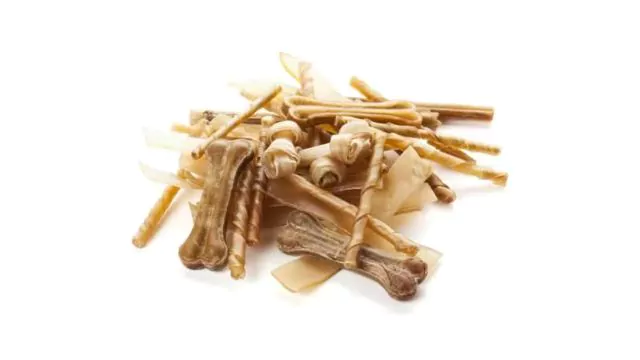
Then leave long-lasting tasty treats as a distraction from you leaving the dog
I tend to use Bulls Pizzles, Beef or Lamb Scalp, or better still a prepared”Bye-Bye” Calves Hoof.
This is a hollow calves hoof that you can fill with all kinds of goodies.
I stuff the Hooves with whole air-dried Sprats and seal them in with salmon or trout mousse then freeze them.
This makes an irresistible natural long-lasting goodbye treat to help them overcome and separation anxiety.
It is also very good for puppies who are getting distressed at night. By freezing the Goodbye Hooves it makes them last longer and cools down the gums as they continue teething for up to one-year-old.
I now sell a range of treats that are totally natural with no nasty additives, colourants or preservatives.
Treats as nature intended. Click on the picture left to see my range of treats If you are using a crate or playpen, then you can leave the Calves Hooves, which even when empty will take days to eat.
You can stuff them with all the things your dog really likes. I have recently put together a recipe for Calves Hooves See below.
You will need a number of these Hooves, which you can buy online or at my store in Hampton Hill. Make up the recipe then freeze in handy size dollops and give to the dog only when you leave, even if that absence initially is only minutes. See Recipes at the bottom of this page. Always give the bones frozen as it will last longer, and especially in young dogs. This will ease and will help to cool inflamed gums when teething. Teething can last until the dog is twelve to thirteen months old.
Put these treats away and only take it out when you leave each day. Place the Beef Scalp, Bulls Pizzle or goodbye Hoof either empty prepared near your dog. When you arrive home exchange for a tasty treat and put the hoof away.
The Hooves Beef Scalp or Pizzle only comes out when you leave. When it gets low then poke out the contents and refill. You are distracting your dog with something that he will find interesting enough to concentrate on and will ignore you leaving, he should appreciate the hoof so much that he will look forward to it coming out, instead of getting upset with your leaving.
I never use Kongs. They are made of rubber. At one time all rubber came entirely from natural sources; now rubber products are just as likely to be made artificially in chemical plants because of demand.
They come in various colours and that may be artificially injected into the rubber. The toy is in the dog’s mouth for long periods. I do not want anything that could possibly leach chemicals into a dog or puppies system. There is nothing natural about Kongs.
I have an online and a physical store in Hampton Hill Greater London and I will not sell anything that has artificial preservatives, colourants, ethoxyquin’s, grains growth hormones or antibiotics we are a natural only store and that includes all food and treats
 Build up a Routine: The hardest time for dogs is immediately after you leave. Their anxious, frantic, and occasionally destructive behaviour generally happens inside the first hour. You need to modify your dog’s behaviour through reinforcement training and behaviour modification.
Put your dog in his crate if you have crate trained, get ready to leave like normal pick up your keys and coat and give the dog the long-lasting treat or the stuffed hoof then just leave.
Come back after 2 minutes. Greet your dog calmly If he is not showing anxiety reinforce this behaviour and exchange the special goodbye treat for something else that he can eat quickly and put the long-lasting treat or hoof away.
Wait a few minutes and then repeat the exercise, this time remaining outside a few minutes longer. Continue practising leaving and returning and exchanging the treats over the next couple of days increasing the absence each time. When you return, greet your dog before offering a treat in exchange for the goodbye treat.
When you reach 45 minutes the length of time the dog is left can be increased by larger increments. Once the dog can be left alone for 1.5 hours, it can usually be left all day. Though I stress if he is left for long periods the crate should be left open. No dog should be locked in a crate all day and no dog should be left alone all day every day.
Exercise Your Dog: A dog that is lacking exercise is more likely to have stress and tension. Take out your dog on long walks, run,s or with play. This goes a long way toward reducing stress. You need of course to be able to recall your dog when off lead, so read my (5) Recall Training article.
Certain food can also cause dogs stress and anxiety because of the additives so feed your dog good quality food. See my article on (6) Dog Food and Behaviour.
Leave the Radio One: Tune a radio to a talk station; not music unless it is classical which most dogs find soothing. Put it on in a room you are often in, but not in the same room as the dog, and close the door.
The dog will hear the human voices from your room and may not feel so alone. Some clients tape-record their own voices and play the recording rather than the radio programme.
Dogs know the sound of your voice. Since the dog is most anxious just after you leave, therefore it need only be an hour long.
Controlling Resources is Vital: When a dog has a strong consistent leader/controller of resources, it has a calming effect on him. He feels safe and taken care of. In the absence of a strong controller, your dog feels obligated to assume that position in the social hierarchy of the family pack.
Since a leader must control all that goes on, his inability to control you leaving causes him stress and anxiety. They sometimes exhibit dominant behaviour to try to stop owners from leaving. Obedience training resource controlling and NILIF techniques are normally the best methods of establishing yourself as a beneficial and strong leader.
 Medical Treatment: Often anti-anxiety medication can be of help whilst you take the dog through a behavioural desensitisation programme.
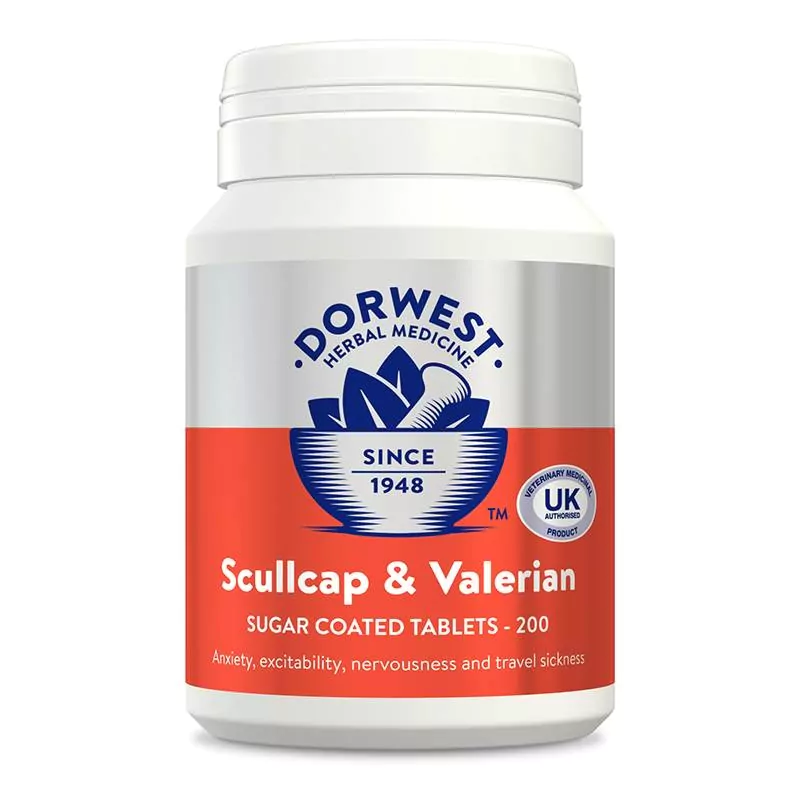
I initially prefer something gentle such as Scullcap and Valerian. It works far better than most other recommended remedies.
Scullcap and Valarian is a traditional blend of two well respected herbal remedies for the symptomatic relief of anxiety, nervousness, excitability and travel sickness in dogs.
You can get the treatments already mentioned either from m physical or online shop Click on the picture right for more information
There is a far stronger mainstream drug called Clomicalm that was specifically created for pets to be used as part of a comprehensive behavioural management programme to treat separation anxiety in dogs older than 6 months of age.
Though I am not a fan of mainstream drugs, sometimes the anxiety is so acute that you need a stronger drug that will help. You can only get Clomicalm medication from the Vet. As with all medication herbal or otherwise, it is advisable to discuss this with your vet.
Consistency Is The Key: You are responsible for providing food and shelter. You also have the responsibility of supplying an environment whereby the dog feels safe and secure. Leadership/Resource controlling plays a major part. Lack of consistency and over-bonding can be a cause and effect of separation anxiety. I often say to my clients that the three most important tenets in dog behaviour and training are Consistency, Consistency and Consistency. Though it must be said other factors may also play their part.
Sometimes you may need to get another dog for company and comfort for your pet, especially if the symptoms are very severe. You may even have to re-home the dog if your lifestyle and work commitments do not allow for a happy and contented pet. My new physical (8) Dog Store is now open in Hampton Hill Greater London just near Bushy Park and 200 yards from Paws for Coffee our famous dog-themed Cafe. Come and speak to me about your puppies or dogs.
(2) Introduce your Dog To a Crate.
(4) Critical Periods Puppies
(5) Recall Training
(7) My Range of Totally Natural Air Dried Treats
(8) The Dog Store
© Stan Rawlinson 1998
Updated regularly as new information becomes available
Last Update October 2020
With all the above it is always prudent to discuss any medication herbal or otherwise with your Vet before embarking on any treatment program